In an era defined by rapid technological disruptions and shifting global dynamics, the definition of a premier education has fundamentally evolved. For families who view education not merely as a pathway to a degree, but as the foundational architecture of their child’s character, intellect, and future influence, the choices made during the formative years are critical.
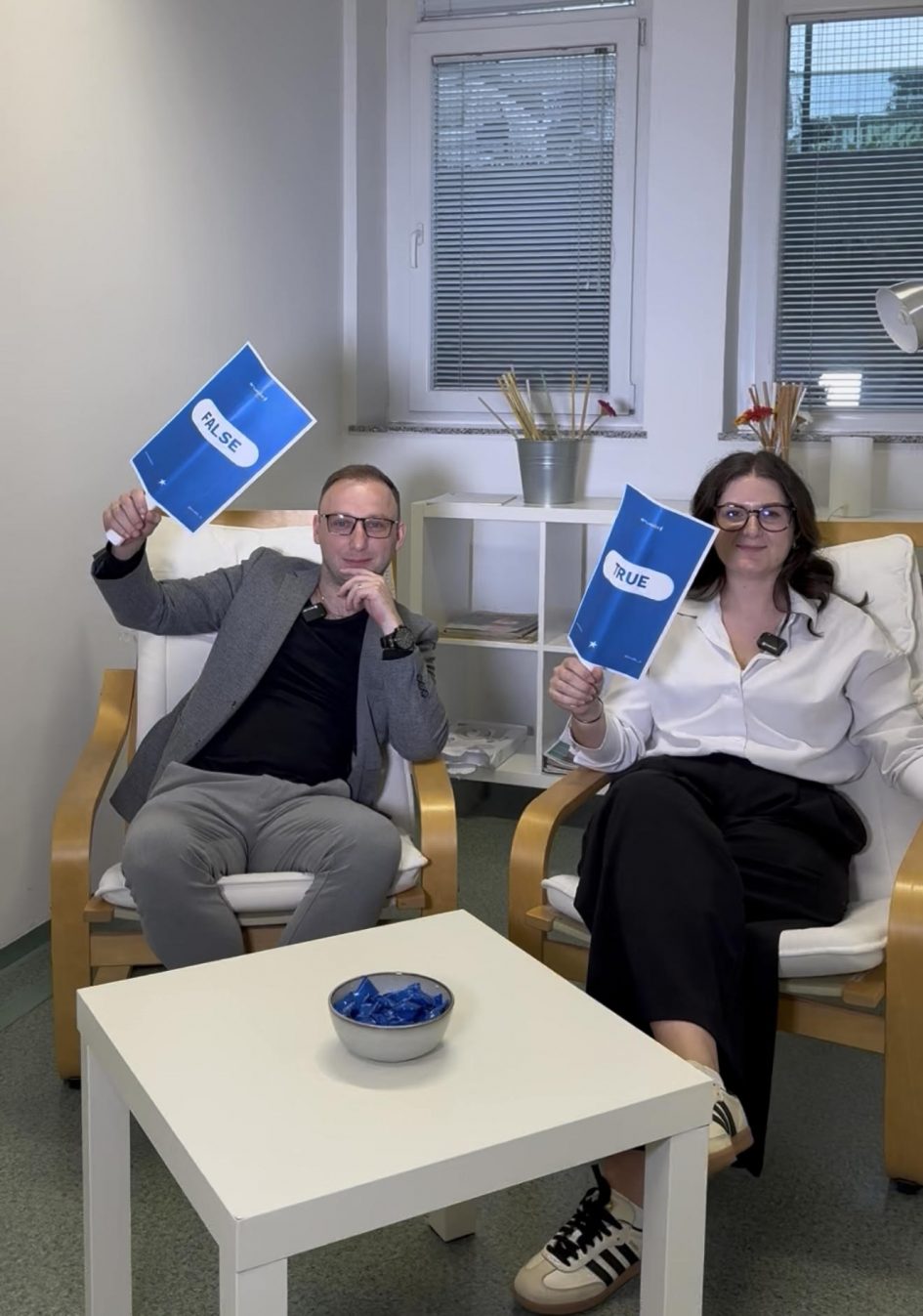
We sat down with Niko Laznik, the IB DP Coordinator and MYP/DP Mathematics Teacher, and Sara Repolusk, the MYP Coordinator, Geography & Sociology Teacher, and Secretary of the School Matura Committee at ERUDIO international school.
In an era where AI tools provide instant answers, how does ERUDIO International School shift the focus from simply ‘finding answers’ to ‘asking the right questions’ and verifying facts? How do you teach students to truly use their brains in a world where AI can do half the work?
“The IB framework was never primarily designed for the memorization of information,” explains Nika Laznik. “Long before artificial intelligence became a part of everyday life, IB programmes were built around inquiry, research, and critical thinking. We encourage students to ask questions, challenge assumptions, evaluate sources, and consider multiple perspectives. Artificial intelligence can provide information quickly, but it cannot replace judgment.”
Instead of banning or ignoring artificial intelligence, we integrate it at ERUDIO International School as a litmus test for critical thinking. As a teacher of sociology and geography, Sara Repolusk emphasizes that the speed of access to information today demands an entirely new level of intellectual hygiene.
“We view artificial intelligence as a tool, not a threat,” adds Sara Repolusk. “The most important skill is no longer just finding information, but knowing how to question it and use it effectively. We teach our students how to evaluate information, compare different perspectives, and justify their conclusions. In a world where AI can generate answers, the true advantage belongs to those who know how to ask meaningful questions—and that is precisely the profile of thinkers we aim to develop.”
Through this combined approach, students do not only learn mathematics or social sciences, but develop the skill of recognizing bias and evaluating evidence. Your teenager is thus not learning to compete with AI in speed, but is developing those cognitive functions required to direct the technology that others merely passively consume.
Discipline outside the classroom can be one of the greatest challenges for parents. How do you guide students to internalize this self-discipline and ownership of their time?
The methodology of ERUDIO International School mirrors the developmental path of top-tier university environments and professional realities. Responsibility is not abruptly shifted onto the student upon graduation; rather, it is systematically built into their daily life.
“Instead of constantly supervising students, we want to help parents and students develop systems and habits that enable self-management,” notes Laznik. “In the MYP programme, students begin to manage longer-term projects and reflect on their learning. By the time they reach the DP programme, they are already balancing demanding schoolwork, internal assessment tasks, and independent research projects like the Extended Essay.”
“We believe that self-discipline is not something a student can develop overnight,” emphasizes Sara Repolusk. “It always stems from experience, making mistakes, and learning from them. At ERUDIO, we create an environment where students are expected to take full ownership of their work, their time, and their responsibilities. Through the preparation of long-term projects, research assignments, and presentations, they learn how to plan and prioritize. Over time, they begin to understand that ultimate success does not depend solely on innate abilities, but primarily on strategy, consistency, and personal responsibility.”
What kind of individual walks out of ERUDIO International School upon graduation, that couldn’t have been shaped anywhere else?
“A successful graduate of the IB programme is often characterized by curiosity, resilience, and global awareness. They tackle complex problems that may not have simple answers with ease. They know how to conduct independent research, communicate effectively, collaborate with diverse groups of people, and think critically about the world around them,” emphasizes Laznik.
“The IB Learner Profile highlights traits such as being knowledgeable, principled, open-minded, reflective, and caring. These are not just academic virtues; these qualities shape the way students approach challenges and relationships throughout their lives. Ideally, students leave the school not only prepared for the next level of education but ready to make a meaningful contribution to society.”
“Our students leave the school as much more than just academically successful individuals,” adds Sara Repolusk. “They enter the world with the ability to think independently, communicate confidently, and operate in environments with people from entirely different cultural and social backgrounds. They are not afraid to ask questions, take initiative, and adapt to new situations, making them exceptionally well-prepared for a complex and diverse world. Most importantly, they understand that learning does not end with graduation. We want every graduate to leave with the mindset that they can continuously grow and create a positive impact wherever life leads them.”
A healthy environment isn’t just community and relationships it also means constructive friction and high-level teamwork. How do you use these relationships to teach students professional communication and emotional maturity?
Students are consistently placed in team structures, challenging debates, and cycles of public presentations, where they must defend their ideas under the watchful eye of their peers and professors, while remaining receptive to new data.
“Through these experiences, they learn that disagreement is not necessarily conflict, but can be an opportunity for personal growth,” explains Nika Laznik. “The international nature of the school exposes students to a wide spectrum of cultures, perspectives, and experiences. Learning to communicate respectfully despite mutual differences is a crucial skill. Emotional maturity develops when they are challenged to listen closely, thoughtfully defend their ideas, and remain open to changing their own minds when confronted with new evidence.”
Sara Repolusk builds upon this aspect of the school’s social architecture by connecting it directly to the reality that awaits students in the high-level business and academic worlds.
“Real life is built on relationships,” emphasizes Sara Repolusk. “Success in academia, careers, and leadership positions directly depends on the ability to communicate, collaborate, and manage different perspectives and opinions. Through projects, debates, and presentations, students learn how to actively listen, express ideas clearly, manage disagreements respectfully, and give and receive constructive feedback. We view communication and emotional intelligence as key life skills. While academic knowledge opens doors, the ability to work effectively with people is what determines how far someone will go once those doors are open.”
As educators you witness these students during the most formative years of their development. What fascinates or perhaps even surprises you the most when observing their intellectual and personal growth within ERUDIO International school?
“Younger students often look only for the ‘right answer.’ As they progress through the MYP and DP, they begin to ask deeper questions and realize that many important issues require nuanced thinking,” explains Laznik.
“It is also inspiring to watch students discover capabilities they initially did not believe they had. Whether through the Personal Project, the Extended Essay, leadership opportunities, or community service experiences, students frequently surprise themselves. The self-confidence that grows from overcoming real challenges is one of the most fulfilling parts of education.”
This transformation from insecure adolescents into decisive individuals is what gives the work at ERUDIO International School its deep pedagogical meaning. Sara Repolusk observes this through the prism of student empowerment, as students often do not know the limits of their capabilities when they first arrive at the school.
“What fascinates me most is what our students are capable of when they are challenged or when they are entrusted with real responsibility,” adds Sara Repolusk. “Students often arrive feeling insecure. Some hesitate before public speaking, others fear making mistakes, and still others underestimate their abilities. Over time, however, we watch them become independent thinkers, confident speakers, and capable leaders. Some of the most rewarding moments happen when students exceed their own expectations or fears and discover strengths they never knew they possessed. Watching this transformation is something we never get tired of, and it is an exceptional reminder of why education matters so much.”
The world outside of school can be unforgiving. How does ERUDIO International School simulate this reality and demand a level of maturity and accountability that goes far beyond just cramming for exams?
Through demanding milestone requirements such as the Personal Project (MYP), the Extended Essay (DP), Theory of Knowledge (ToK), and Creativity, Activity, Service (CAS), ERUDIO requires students to initiate, execute, and defend real-world projects.
| Academic Pillar | Core Cognitive Competency | Real-World Equivalent |
| Personal Project (MYP) | Self-directed execution & goal architecture | Entrepreneurial launch / Project Management |
| Extended Essay (DP) | Rigorous, undergraduate-level primary research | Academic publishing / White paper synthesis |
| Theory of Knowledge (ToK) | Epistemological analysis (How we know what we know) | Strategic risk analysis & bias mitigation |
| CAS (Creativity, Activity, Service) | Experiential leadership & societal impact | Corporate Social Responsibility (CSR) / Philanthropy |
“The IB programme does not try to shield students from challenges, but teaches them how to navigate through them,” states Laznik. “Students learn that growth often comes from perseverance and adjustments, rather than immediate success. By graduation, students experience a range of intellectual and personal challenges that mirror many of the demands they will encounter at university and in their professional lives.”
This approach to preparing for real life is complemented by Sara Repolusk, who warns that outside the school walls, the mere memorization of data has long since ceased to provide a competitive advantage.
“The world beyond school rarely rewards memorization alone. Universities and employers expect individuals who can work independently, collaborate with others, and adapt to new challenges,” adds Sara Repolusk. “At ERUDIO International School, we try to provide students with opportunities to practice those skills while they are still at school. They manage complex projects, conduct independent research, meet real deadlines, and learn to reflect on both successes and setbacks. They are encouraged to take responsibility for their choices and understand that growth often comes through challenge. Of course, students do not always get everything right the first time. Learning how to deal with setbacks, adjust their approach and keep improving is an important part of the process. Those are experiences that help them prepare for life beyond school.”
To explore how ERUDIO International School aligns with your family’s vision for the future, discover curriculum and admissions standards directly at ERUDIO International School.


